Safety Guidelines in the Workplace
Workplace safety depends on employees knowing how to recognize hazards and follow safe practices while performing their daily tasks. Clear safety guidelines give workers a practical framework for preventing injuries, protecting themselves and others, and responding appropriately when hazards or emergencies arise.
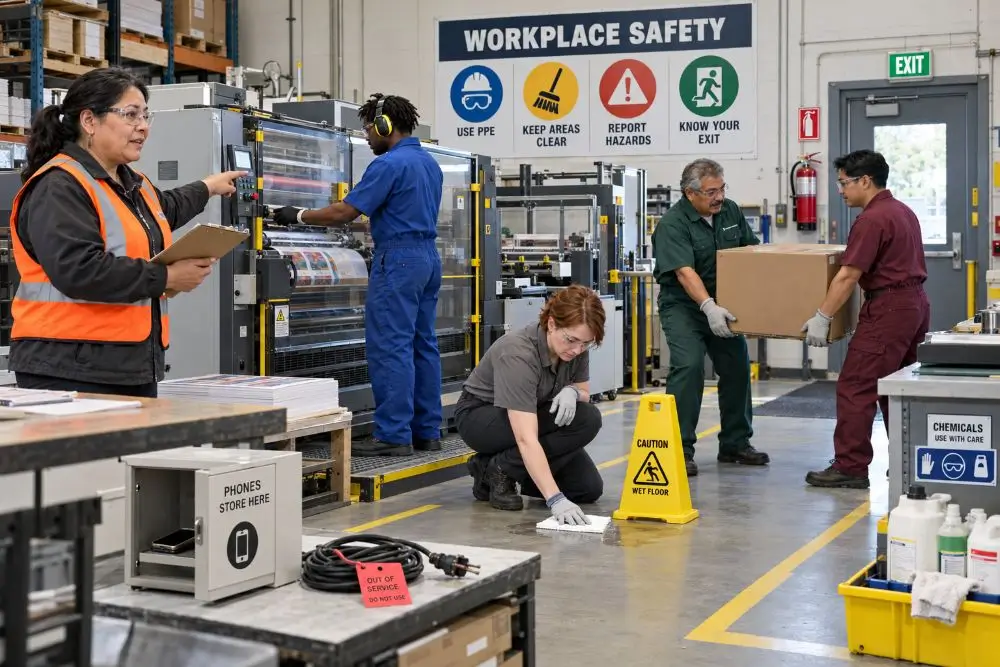
While every workplace has its own risks and procedures, some basic safety practices apply across many industries. These include using appropriate personal protective equipment, maintaining good housekeeping, operating equipment safely, reporting hazards, and knowing what to do during an emergency. Consistent training and following established procedures can help make safety an everyday part of the workplace.
What Are Workplace Safety Guidelines?
Workplace safety guidelines are instructions and recommended practices that help employees perform their jobs safely and reduce exposure to workplace hazards. General guidelines may cover practices that apply to many workplaces, such as proper PPE use, housekeeping, emergency preparedness, and hazard reporting, while workplace-specific procedures address the particular equipment, tasks, and hazards found at a specific job site.
Effective safety guidelines should be easy for employees to understand and practical enough to follow during everyday work. They should be communicated clearly, kept accessible, and updated when workplace conditions, equipment, or safety requirements change.
Why Are Safety Guidelines Important?
Safety guidelines help employees understand how to perform their work safely and what actions to take when they encounter a hazard. Clear expectations can help reduce unsafe practices and support consistent safety procedures across different employees, shifts, and work areas.
They also give employers a structured way to identify and address workplace hazards. When employees understand how to recognize, report, and respond to safety concerns, potential problems can be addressed before they contribute to an injury or workplace incident.
Follow Proper Workplace Procedures
Employees should follow established safety rules and instructions whenever performing workplace tasks. If a procedure is unclear, workers should ask a supervisor or qualified person for clarification rather than making assumptions. Safety procedures should never be bypassed simply to complete a task faster, and employees should report procedures that no longer seem appropriate for current equipment, tasks, or workplace conditions.
Use Personal Protective Equipment (PPE)
Personal protective equipment (PPE) may be required when workers are exposed to specific workplace hazards that cannot be adequately controlled through other measures. Depending on the job, PPE may include safety glasses, gloves, hard hats, hearing protection, and protective footwear. Employees should use the appropriate PPE correctly, ensure it fits properly, inspect it before use, and follow workplace requirements for its care and maintenance.
Maintain Good Housekeeping
Good housekeeping helps keep work areas organized and reduces hazards such as slips, trips, and blocked access. Employees should clean up spills promptly, remove unnecessary clutter, keep walkways, stairs, and exits clear, and return tools and materials to their proper storage areas after use.
Practice Safe Equipment and Machinery Use
Only employees who are properly trained and authorized should operate workplace equipment or machinery. Workers should follow established operating procedures, inspect equipment before use, and report defects or damage. Machine guards and other safety devices should never be removed, bypassed, or disabled.
Prevent Slips, Trips, and Falls
Keeping floors, walkways, and work surfaces clear can help reduce common slip, trip, and fall hazards. Employees should address spills and obstructions promptly, use handrails where provided, and use ladders, platforms, and other access equipment correctly when performing work at elevated locations.
Practice Electrical Safety
Employees should avoid using electrical cords, plugs, or equipment that show signs of damage and should not overload outlets or extension cords. Where applicable, electrical equipment should be kept away from water and other sources of moisture. Electrical repairs, installations, and other work requiring specialized knowledge should only be performed by qualified personnel.
Handle Chemicals and Hazardous Materials Safely
Workers should read chemical labels and Safety Data Sheets (SDS) before handling hazardous materials and use the required PPE and safety controls. Chemicals should be stored according to workplace requirements, and employees should understand the appropriate procedures for responding to spills, leaks, or accidental exposures.
Practice Safe Lifting and Material Handling
Before lifting or moving a load, employees should assess its weight, size, shape, and stability and use appropriate lifting techniques. Loads should not be carried in a way that blocks visibility, and carts, hoists, lifting equipment, or assistance from another worker should be used when materials are heavy, awkward, or difficult to handle safely.
Report Hazards, Injuries, and Near Misses
Employees should report unsafe conditions, injuries, and near misses as soon as possible so appropriate action can be taken. Near-miss reports can help identify hazards before they result in an injury or incident. Reporting procedures should be simple and accessible, and supervisors should follow up on reported concerns and corrective actions.
Be Prepared for Workplace Emergencies
Employees should know the location of emergency exits, evacuation routes, assembly areas, first-aid supplies, and other emergency equipment. Understanding alarm signals and workplace emergency procedures can help workers respond appropriately during an incident. Participating in required drills and training also helps employees become familiar with what to do in an emergency.
Stay Alert and Avoid Workplace Distractions
Employees should remain focused while performing safety-sensitive tasks and avoid unnecessary cell phone use or other distractions. Workers should also avoid working while impaired or excessively fatigued and stay aware of moving equipment, coworkers, and changing conditions. Taking appropriate breaks can help employees maintain alertness during their workday.
Conclusion
Workplace safety guidelines provide employees with clear practices for recognizing hazards, protecting themselves and others, and responding appropriately to unsafe conditions and emergencies. From using PPE and operating equipment safely to maintaining good housekeeping and reporting hazards, these everyday practices can help reduce workplace risks.
Safety is most effective when guidelines are understood, followed consistently, and supported by ongoing training. By staying alert, following established procedures, and actively participating in workplace safety programs, employees and employers can work together to create a safer and more productive work environment.
Related Posts
Safety Guidelines in the Workplace

What are the Stages of an OSHA Inspection?